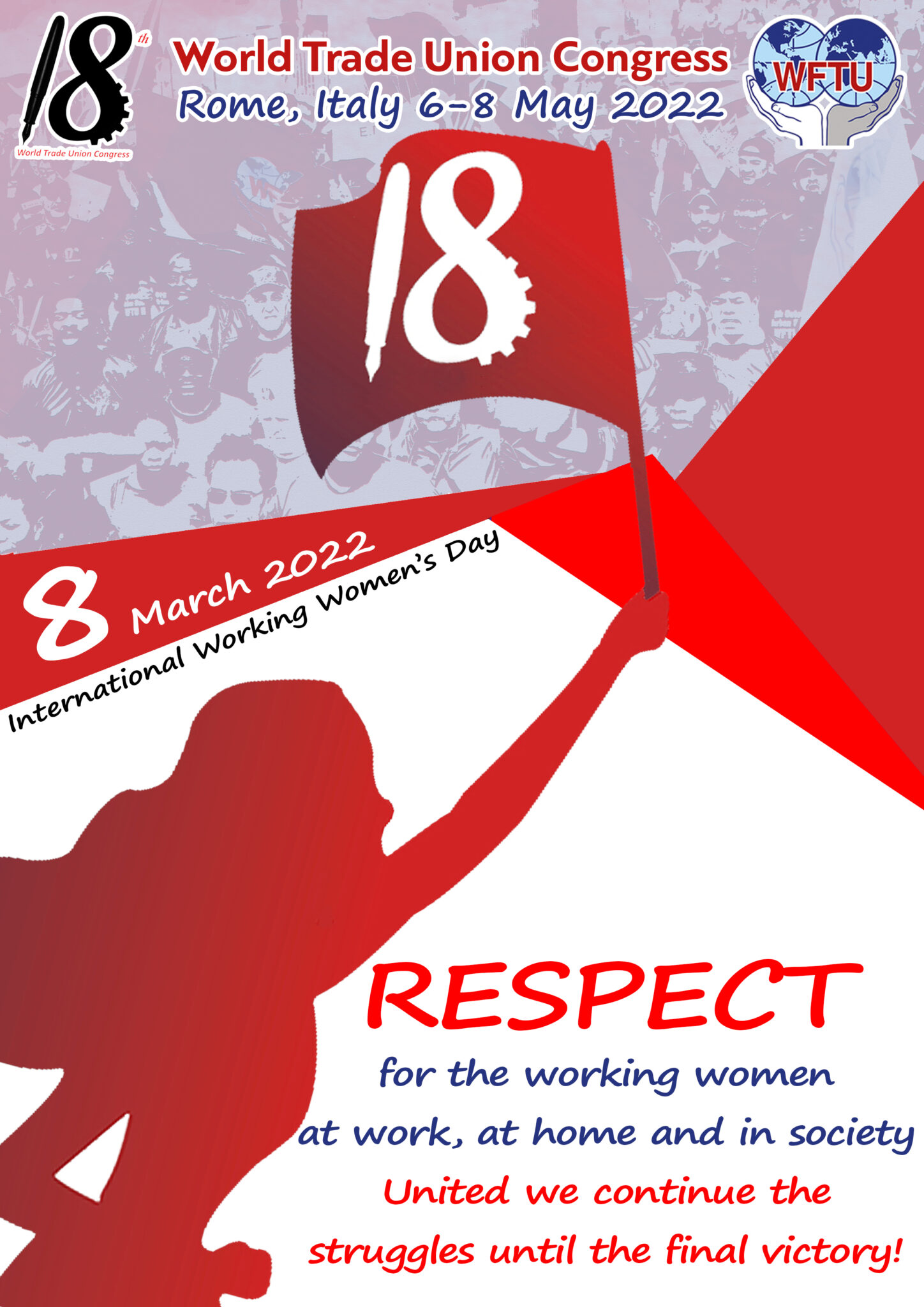
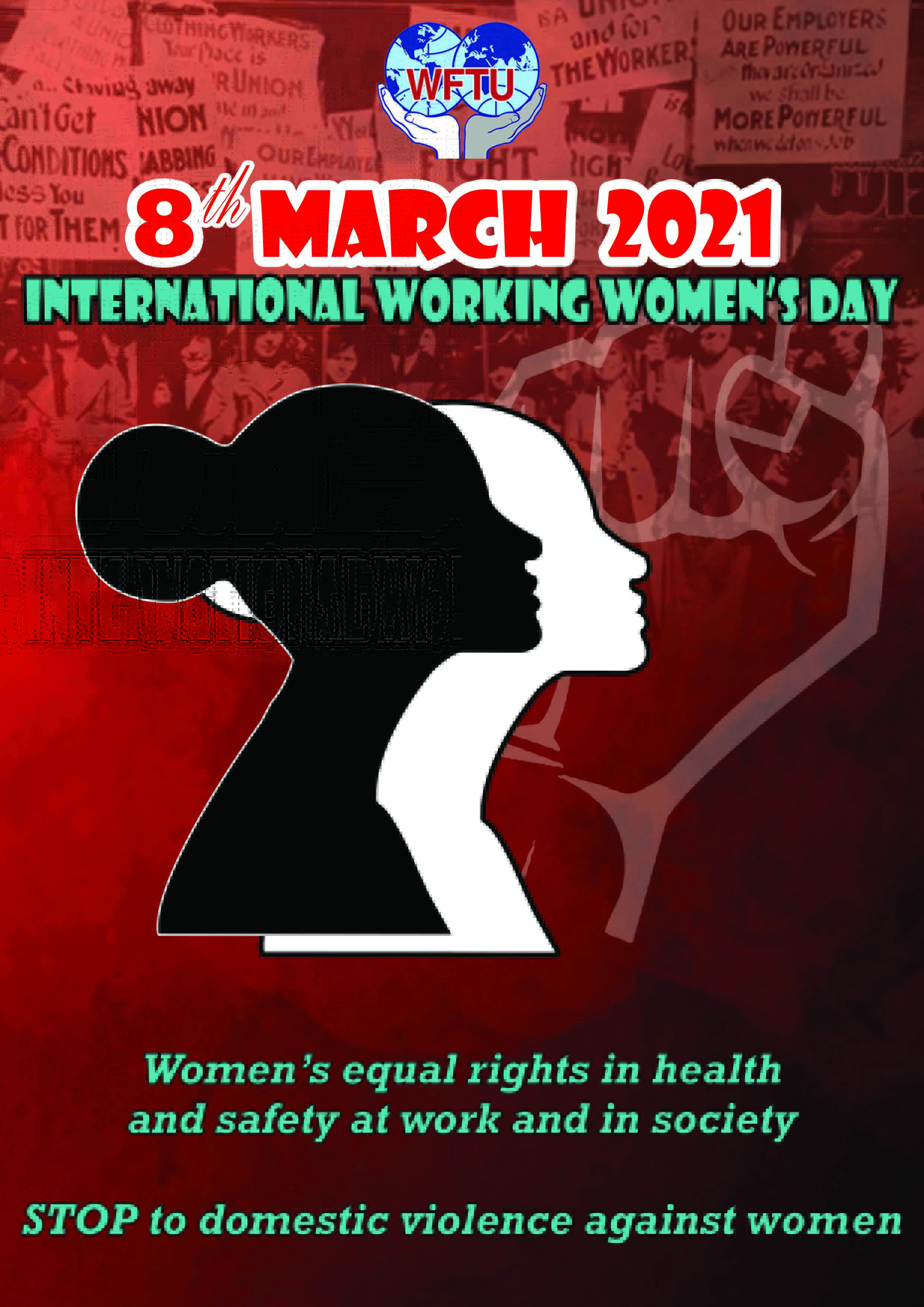
Här kommer ett uttalande som har kommit till oss från WFTU, Den fackliga Världsfederation, angående den Internationella Kvinnodagen. Vi återger detta på engelska.

Statement on the International Women’s Day, 8th March 2012
The massive bloody strike on 8th March 1857 of the female workers in the textile industries of New York who -demanding the redaction of the work hours to 10 hours/day, equal pay of men and women and health and safety conditions in the work places- were brutally attacked by the government and the employers, motivated the 2nd International Conference of the Socialist Women in Copenhagen in 1910 –held with the initiative of the great German communist Clara Zetkin- to call for the celebration of the 8th March as the International Day of Women.
This year we celebrate this International Women’s Day during a deep global capitalist crisis, which has multiple facets in the financial, economic, social, labor, environmental and political level. This deepening capitalist crisis is combined with an effort of the bourgeoisie to minimize its losses by transferring the biggest burden to the working class and the popular layers.
The female unemployment reaches over 81 million women. More and more women are employed with “flexible” working relations, part-time job, labour-broking. Today, women represent the majority of the poor and illiterate population and millions of them have no access to education, healthcare, food, clean water and other basic needs. Millions of women lack maternity protection; thousands of women die from pregnancy and lack of medical care; millions of women are forced to emigrate; millions are victims of violence, abuse, human trafficking and sexual exploitation during armed conflicts and military interventions. Additional pressure on women refers to the implications of the reduction, elimination and privatization of public social services. This has an impact on the quality of the childcare and the elderly care.
The trade unions have a responsibility and a fundamental role in developing efforts to promote gender equality in the workplace, in our own unions, in our respective countries and globally not by the equal butchering of rights but for the full satisfaction of the contemporary needs of the man and women of the working class and the popular strata.
WFTU supports all those who struggle for: Stable work for all with decent salaries, Protective measures for the unemployed, Social security and pensions for all, Maternity and parental leave for all the mothers or the fathers with full salary and social security rights, Exclusively public and free system of Education and Healthcare, no privatizations and monopoly activity. Public and free nurseries, creative leisure centers and children summer camps.
The WFTU reaffirms its commitment to support these struggles that will not end until the elimination of the conditions that allow poverty, inequality and exploitation of man by man in the capitalist system. We call for strengthening the fight, class unity and international solidarity. We call on all working women to be on the frontline of the class struggle. We appeal on all the class-oriented trade unions to enhan e the initiatives taken by the WFTU for the formation of an International Women’s’ Committee with rich action in favor of the international working women’s rights.



Du måste vara inloggad för att kunna skicka en kommentar.